
.png)
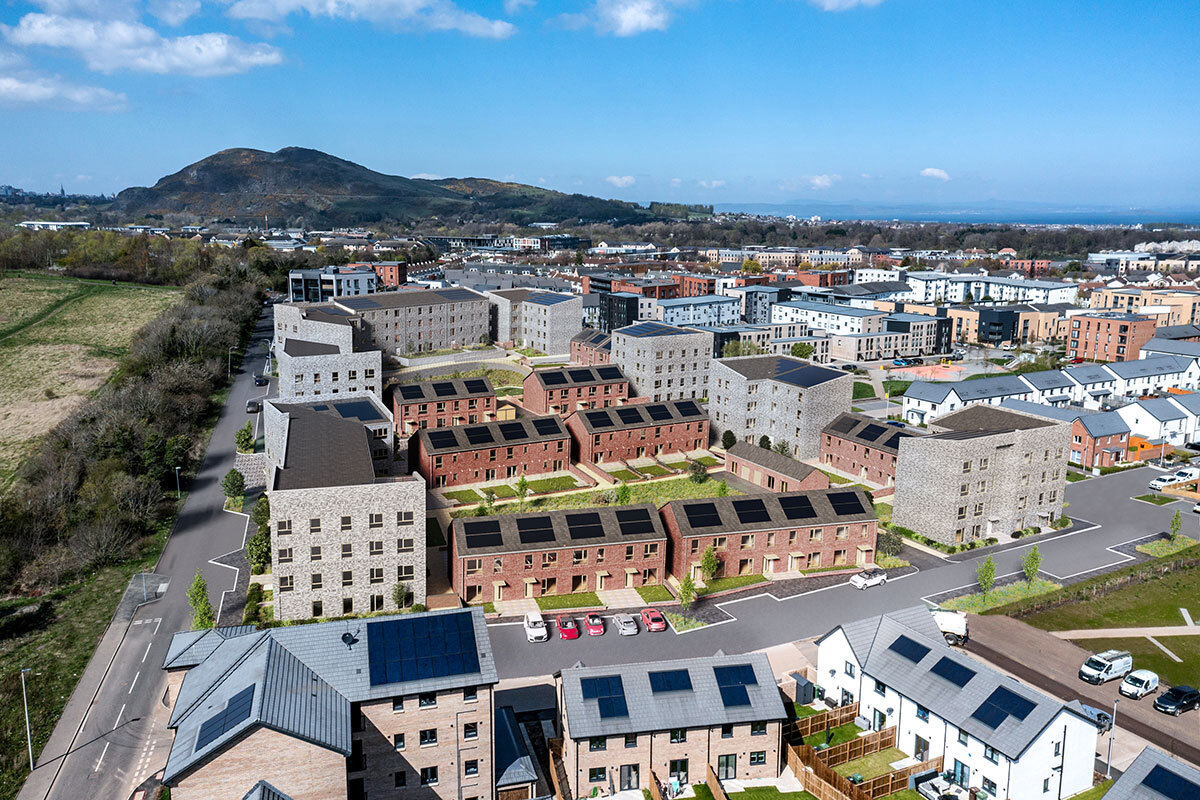
The capital is set to receive a substantial increase in support from the Scottish Government to bolster affordable housing - yet local officials warn the scale of the challenge remains far greater than the boost suggests.
Funding boost
The Scottish Government’s so-called “voids and acquisition” fund - designed to enable councils to bring empty homes back into use or acquire existing properties - is entering its second year and is reported to double in size.
For the city of Edinburgh, this means an allocation of £28.6 million for 2025/26, an increase of £13.8 million compared with the previous year.
When added to other Scottish Government affordable-housing supply programmes, Edinburgh’s total allocation stands at £73.7 million for 2025/26.
The funding is specifically targeted at local authorities facing “highest sustained pressures on temporary accommodation” and emphasises the acquisition of existing homes, particularly larger, family-sized units.
Local reaction
Councillor Lezley Marion Cameron (Housing, Homelessness and Fair Work Convener) welcomed the extra funding:
“I warmly welcome this award of £73.7 million for Edinburgh from the Scottish Government … this funding recognises the pressures in Edinburgh in terms of acute housing demand and increased dependence and spend on temporary accommodation.”
However, she sounded a cautionary note: despite the positive move, supply remains well behind demand, and “much more needs to be done, and much more money needs to come to Edinburgh.”
Wider context: Scotland’s housing target & funding pressures
Nationally, the Scottish Government remains committed to delivering 110,000 affordable homes by 2032 under its Affordable Housing Supply Programme (AHSP).
A SPICe (Scottish Parliament Information Centre) briefing reports that by late 2024, around 24,400 homes (roughly 24 % of the target) had been delivered from the start of the scheme.
In the budget for 2025/26, the AHSP is set at £768 million, representing a 32 % real-terms increase on the revised 2024/25 figures.
Why Edinburgh’s housing situation is especially acute
Edinburgh declared a housing emergency nearly two years ago, recognising that high demand, rising rents, conversions to short-term lets and high use of temporary accommodation combine to create pressure.
In Edinburgh’s case, the council’s own housing strategy - as quoted in local media - estimates that the city may need up to 35,000 additional affordable homes over the next decade just to meet demand.
In addition:
- Edinburgh’s allocation of the extra funding is underpinned by the fact that it is one of the councils facing the most significant temporary accommodation costs and pressures for family-sized homes.
- Acquiring existing homes (rather than only building new ones) is seen as a quicker route to easing the immediate pressure on families in unsuitable or temporary accommodation. This underpins the funding approach of the voids/acquisition fund.
Challenges ahead
While the funding boost is welcome, several barriers remain:
- Delivery vs commitment gap: The SPICe briefing notes that although the target is 110,000 homes, at current approval and site-start levels the target looks challenging to meet.
- Escalating build and acquisition costs: The cost of providing an affordable home has risen, and the Scottish Government has correspondingly increased the per-home grant allowance.
- Time delays: Even acquisitions take time; meanwhile, families continue to live in temporary accommodation. The ending of voids and bringing properties back into use aren’t instantaneous fixes.
- Scale of supply: The estimated 35,000 additional homes required in Edinburgh (over the next decade) far outpaces the recent funding uplift, indicating the gap remains large.
- Broader market pressures: Private rent rises, short-term let conversions, and persistent demand in the capital all make it harder to ensure that affordable supply meets the right sizes (especially family-sized) and locations.
What to watch for
- How many homes Edinburgh actually acquires or brings back into use via the voids/acquisition fund in the next 12-18 months - compared with how many are new builds.
- Whether Edinburgh’s council and partner housing associations manage to scale up delivery from current levels to match the “35,000 additional homes” scale of need.
- Whether the Scottish Government and local authority commit further funding beyond the current allocation, or whether this uplift proves a short-term fix.
- How rising construction and acquisition costs, as well as planning delays, affect what can be delivered with the available money.
- Whether outcomes improve for those in temporary accommodation (i.e., fewer households in temporary places; more moving into settled affordable housing).


